Read | Listen| Write
America: A Nation of Mistaken Identity
Civics Must Return to the Center
By Kenneth Allen Basham, III
OPENING – The Declaration
Does our democracy speak?
It does, of course.
Even America’s greatness
was built upon discourse.
Specifically, ours
a profound declaration
a single expression
to coalesce a nation.
1776,
in the Hall of Independence
the signing of one document
introduced a sworn system
The aroma of the meeting,
oiled pine and waxed (lit) candles
Plus, the atmospheric sounds of definitive background chatter
The metallic clicks and tings of carriage tires and harness rings
Layered against the distant pitch of cobblestones and horseshoe clinch
This most prominent eventultimately culminated with this:
A scratch of quill on parchment paper
from Hancock’s historic wisp:
The United States of America, declared;
Officially Established
A unification of identity
with a core of Independence
only symbolized the beginning.
Who could have imagined,
with a vision so blatant;
that this newly independent identity
just may have been mistaken.
MOVEMENT I — THE MISUNDERSTANDING
(Enter 1787)
While we proceeded to pave way
as 11 years the brave
There remained some subsections
still 12 years a slave
Our national declaration
promised sovereignty and parity
Yet a new decree proposed;
To provide further clarity
A division of our townships
into thirty-six 1-mile sections;
this mandate became known
as the Northwest Ordinance of 1787
The center of each township
would hold section 16;
a plot of land that would command
the offering of education that’s free
Even the early founders knew
our schools were best for civic preparation;
yet this didn’t fully fill the void
for the identities that were mistaken
MOVEMENT II — THE MISALIGNMENT
So this vision of free education existed,
but wasn’t feasible for all.
Because much of early America
was simply agricultural.
Our Parents would work the farming fields;
and our Children would too.Even my own grandfather dropped school for work
Farming fields by grade two
As the Northwest Ordinance stated,
the center shall be devoted to education
But when school isn’t an affordable option
who taught/teaches this subsection civic participation?
Instead of liberty to fully embrace
the unified identity of the nation
these marginalized citizens
only inherited isolation
While in theory this was a noble system,
but even noble systems drift
So what the Northwest Ordinance placed freely at center
some STILL couldn’t pay for it
MOVEMENT III — THE MISINTERPRETATION
(Enter 1870)
With honor, our mighty nation
chose to examine this in depth
And prompted our states to invest individually
in our nation’s/country’s civic health
The direct cost of education
was no longer a family burden
So in 1870, many) State Constitutions
accepted this civic burden
When the training of our future leaders
Became a proclamation of the state
The barrier between isolated and independent instantly began to break
Now divisions did remain,
but a step forward was just that
State Unity through education,
and a new basis for intellect
Closing — THE INVITATION
A better chance for balanced centers
in our towns, communities, and classes
All due to the unified agenda
Of free education for the masses
Our semi-quincentennial history
rebirths our view of civics
And to extinguish any lingering excuses,
let’s civically define the mission
Citizens who do not isolate our constitutional view of independence,
But those who live in service of others
Protecting status and privilege
Embracing engagement willingly
Voting with responsibility
Understanding the tenets of democracy
While taking pride in our identity
For the next 500 years at least
without making the view any clearer,
The sole discourse of our democratic republic must be:
Let’s return civics to the center!
Meet the Poet – Kenneth Allen Basham, III
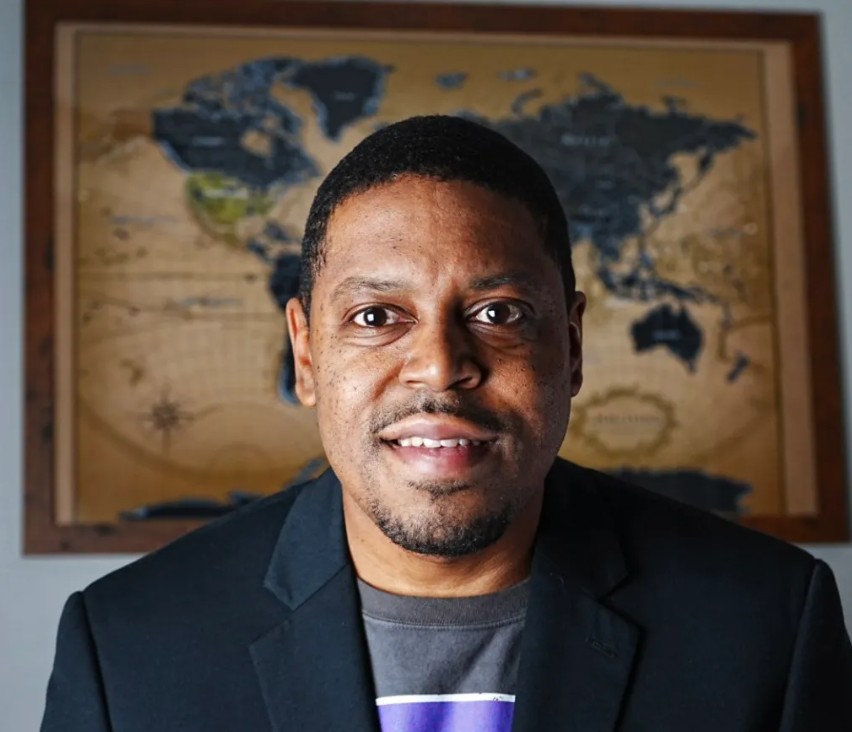
Kenneth Allen Basham III is an American poet, speaker, and civic voice whose work centers on presence, participation, and generational responsibility. Writing from Chattanooga, Tennessee, his poetry reflects themes of social withdrawal, welcomed belonging, and overdue re-engagement.
His contribution to the America 250 Poetry Pathway offers language that guides a national moment of reflection grounded in stewardship of community and legacy. Basham’s work considers how individuals move from observation to participation, and how intentional presence shapes public and civic life.
Kenneth writes under the name Mista-Ken, with the understanding that poetry, like democracy, is sustained by those who are willing to remain present within it.
Let Us Hear From You!


 poetry pathway chattanooga