Read | Listen| Write
Abby Crawford Milton
By Peggy Douglas
I was born in Milledgeville, Georgia,
February, 1881—
cold pressed into red clay,
a house that knew history
before it learned my name.
My father carried the Civil War
like an unmentionable shadow
and the law— a promise he trusted.
My mother, Anna Orme,
taught me quieter strength:
grace that did not bow.
I learned early—
blood remembers,
but doesn’t get the final say.
I studied where doors cracked open—
Georgia Women’s College,
then the law in Chattanooga,
rooms heavy with men,
their portraits and opinions.
I spoke as if I belonged
until belonging answered back.
Married a newspaperman—
George Fort Milton—
ink-stained fingers,
newsprint breath.
Together we built
The Chattanooga News
where I learned
how power decides
what gets printed,
how a woman’s voice
is buried—
or typeset in bold.
I was never made for the margins.
Outside of work,
I could be found in crowded rooms—
chalk dust and perfume,
women shoulder to shoulder,
counting votes we could not yet cast,
imagining futures
men said were not ours.
They called it suffrage,
as if an ending.
But I knew the vote
was only a handle,
not the door itself.
League by league, county by county,
we stitched Tennessee together
with sore feet, and more stubbornness
than sense.
June 1919.
they named me president—
of the Tennessee
Equal Suffrage Association.
Didn’t feel like a crown.
Felt like more work a-coming.
August 1920.
Tennessee was a hinge of history,
last state needed
allowing women the right to vote.
We leaned our weight
against resistance
until the door gave way.
Once the law passed,
they wanted gratitude and quiet.
We offered neither.
Independence is not a gift,
but the right to stand
and shape what comes next.
Then came the firsts—
President, Tennessee League of Women Voters.
Women seated, not as guests
but as architects—
inside parties, committees,
the machinery itself.
When they tried to erase us,
we fought back.
A right unused
is a right stolen,
I believed in women,
land, water, and light–
helped carve a park
from the Smoky Mountains—
counted votes like trail markers,
working through switchbacks,
outlasting resistance
until the bill passed,
April tenth, 1925.
Some victories wear trees
instead of trophies.
Over the years,
they tried to make me smaller—
in columns, in whispers,
doors left ajar, but I told women:
the vote is only the beginning.
Democracy asks for hands willing to stay.
So listen up—
the door is open now.
Step on through.
Meet the Poet – Peggy Douglas
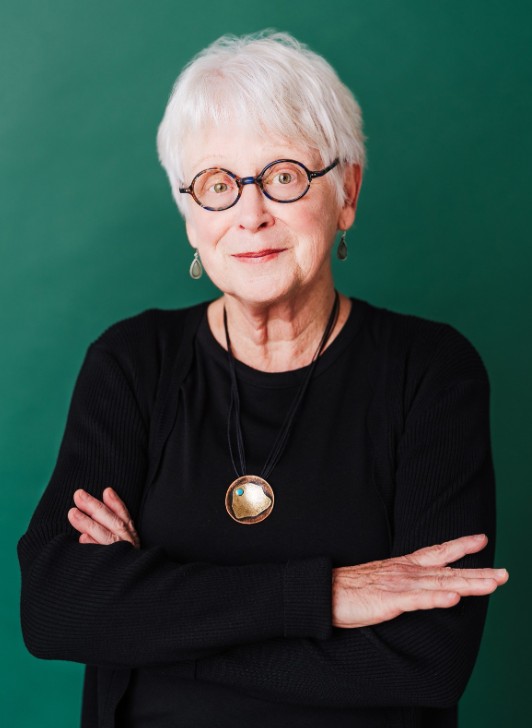
Peggy Douglas, Ph.D. is an oral historian, college professor, playwright, and musician in Chattanooga, TN. Her plays are borne out of oral history interviews with people from marginalized communities, and she shapes their disparate voices into a collection of poetic monologues, which she then produces onstage.
In 2022, Peggy received the Tennessee Arts Commission’s Individual Artist Fellowship Award for Playwriting. In 2024, she received the Stetson Kennedy Vox Populi (“Voice of the People”) Award from the Oral History Association.
Let Us Hear From You!



 poetry pathway chattanooga